

Dear Toddler Parents, If your little one is having a tough time with pacifier weaning, I would like to share a gentle approach to binky weaning in 5 easy steps to help your toddler let go of their binky without tears.
This month’s blog was inspired by recent conversations with a few dear families struggling to get a good night’s sleep and wondering what to do with toddlers who have firmly decided that their pacifiers are here to stay!
Every parent knows that good sleep helps keep the entire family happy. Yet children move through so many stages. From infancy to toddlerhood, childhood, and eventually the teenage years, with each stage bringing its own developmental milestones and parental adventures.
This blog is especially for our dear toddler parents: the ones navigating daycare and preschool, juggling work schedules and precious time together, caring for other children, or perhaps welcoming a new baby into their toddler’s once-familiar world.
In the middle of all those changes, a beloved pacifier can represent comfort, security, and a reliable way to settle into sleep. So, when the time comes to say goodbye to the binky, we want to honor what it has meant to the child while helping the whole family move gently toward the next stage.
If your toddler is deeply attached to their pacifier, you are certainly not alone. Let’s talk about why little ones love their binkies, when the habit may begin to affect their developing smile, and my gentle five-step approach to a happy pacifier graduation.
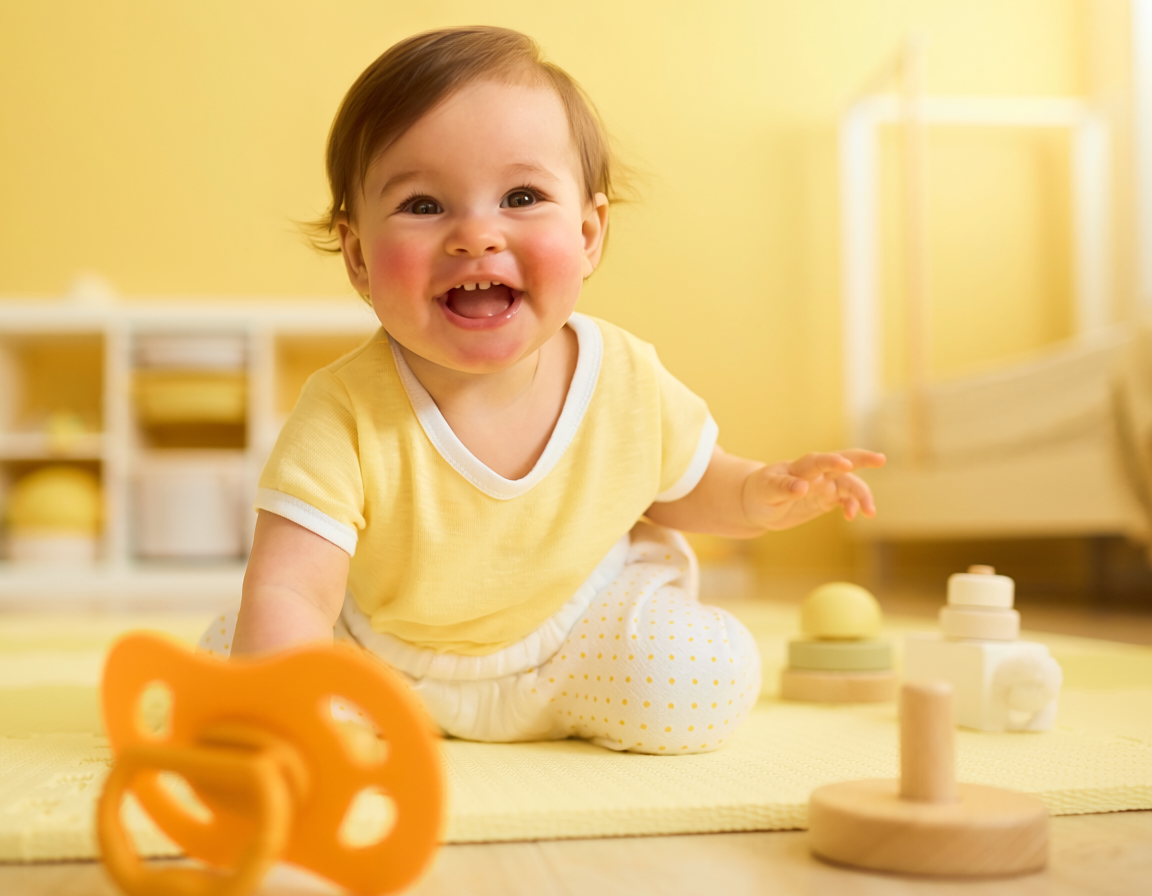
Why do babies love pacifiers?
Infants are born with a natural desire to suck, and many an ultrasound has captured a baby happily sucking a thumb or finger in utero. Suckling not only serves to satisfy the need for comfort but also has an important role in oral development by stimulating the mouth, tongue, and palate, as well as motor development of the oral musculature and the cranial nerves.
This oral stimulation during the first year of life provides important information to the developing nervous system promoting oral motor skill development necessary for feeding. Nonnutritive sucking, such as pacifier use, can also promote calming and self-regulation.
Why do babies love pacifiers?
Infants are born with a natural desire to suck, and many an ultrasound has captured a baby happily sucking a thumb or finger in utero. Suckling not only serves to satisfy the need for comfort but also has an important role in oral development by stimulating the mouth, tongue, and palate, as well as motor development of the oral musculature and the cranial nerves.
This oral stimulation during the first year of life provides important information to the developing nervous system promoting oral motor skill development necessary for feeding. Nonnutritive sucking, such as pacifier use, can also promote calming and self-regulation.
When should children stop using a pacifier?
Pacifiers can be very helpful during infancy. As children grow, however, a persistent sucking habit can begin to influence the way their teeth, palate, and bite develop. Something else also happens as infants grow into toddlerhood: it becomes increasingly difficult to take away a pacifier that they have become accustomed to.
The American Academy of Pediatric Dentistry explains that pacifier use beyond 18 months may begin to affect the developing mouth and bite. In a 2025 systematic review and meta-analysis by Chong Gao, Miaoran Wang, Hairong He, He Lei, and Liqin Mei, the researchers found that prolonged nonnutritive sucking was associated with an increased risk of anterior open bite development
The AAPD recommends helping children discontinue nonnutritive sucking habits by 36 months of age. Fortunately, many of the early bite changes associated with pacifier use can improve when the habit is discontinued early enough.
This does not mean that the pacifier must disappear in one dramatic evening. Every child is different and every family is unique. We can honor the comfort it has provided while lovingly guiding the child toward pacifier independence.
Why is it hard for some toddlers to let go of the pacifier habit?
The first is biological. Toddlers continue to enjoy the calming and pleasurable sensation that sucking provides. We all know how challenging it can be to convince a toddler that something so comforting might eventually become problematic!
The second reason is rooted in familiarity and habit. We humans are creatures of habit, and toddlers are no different. When something brings pleasure and soothing and becomes woven into a child’s daily and nightly routines, making a change means gently addressing all of those layers: the physical enjoyment, the emotional comfort, and the familiar ritual.
Can parents Simply take the pacifier away?
Absolutely. Some parents choose a direct approach: call in the “Binky Fairy,” say goodbye to the pacifier, and tough it out through a few difficult nights. While this can certainly get the job done, it is not the best fit for every child or every family. Other parents find themselves negotiating with a very determined toddler and feeling a little lost when it comes to their options.
Because I am a fan of baby steps and gentle guiding, I find that it helps to first acknowledge the reasons behind a toddler’s attachment to the binky and to know that there is light at the endless pacifier tunnel! I recently made a little video for parents demonstrating the gentle method I have shared with families for years. The idea is not to suddenly take away something your toddler deeply loves. Instead, we gradually make the pacifier a little less satisfying until your child is ready to let it go.
While this method has worked for many families over the years, I always like to note that it’s meant for an older toddler who is ready for saying goodbye to the pacifier and not for a young infant. It’s also important to choose a pacifier that is in good condition and inspect it carefully before every use.
Dr. Reem’s Gentle Five-Step Binky Method
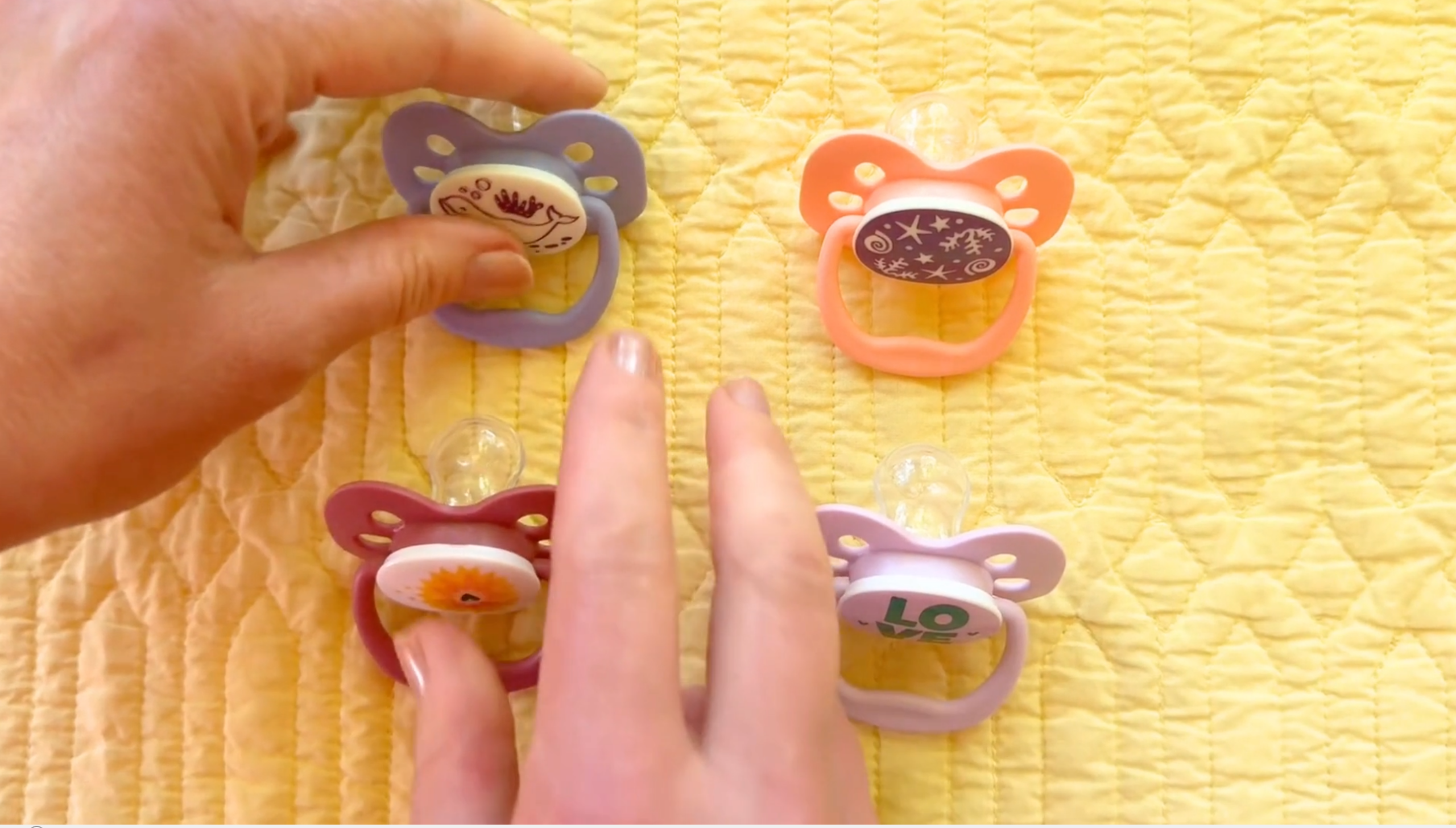
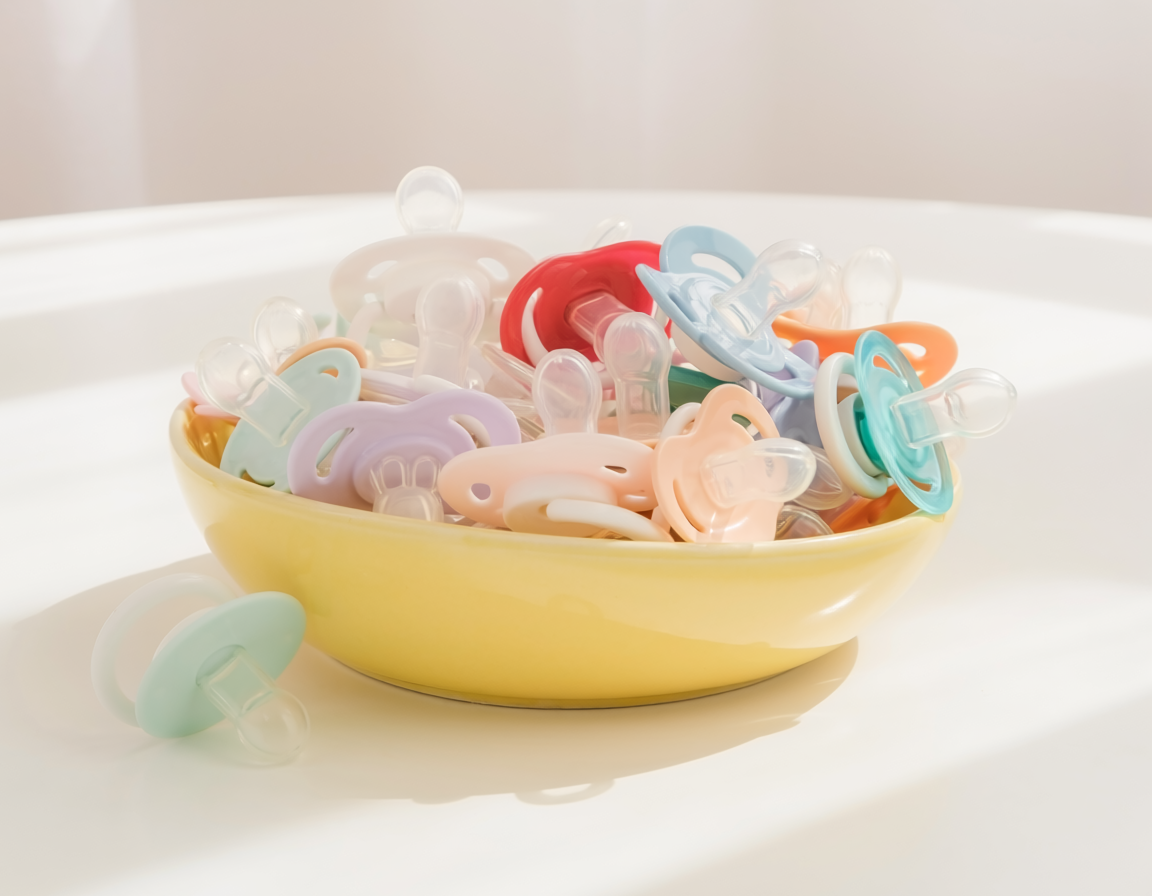
Step 1: Gather the Pacifiers
Pacifiers tend to multiply! Begin by gathering them all and keeping only one or two. This prevents your toddler from simply finding another perfect binky when the first one begins to change.
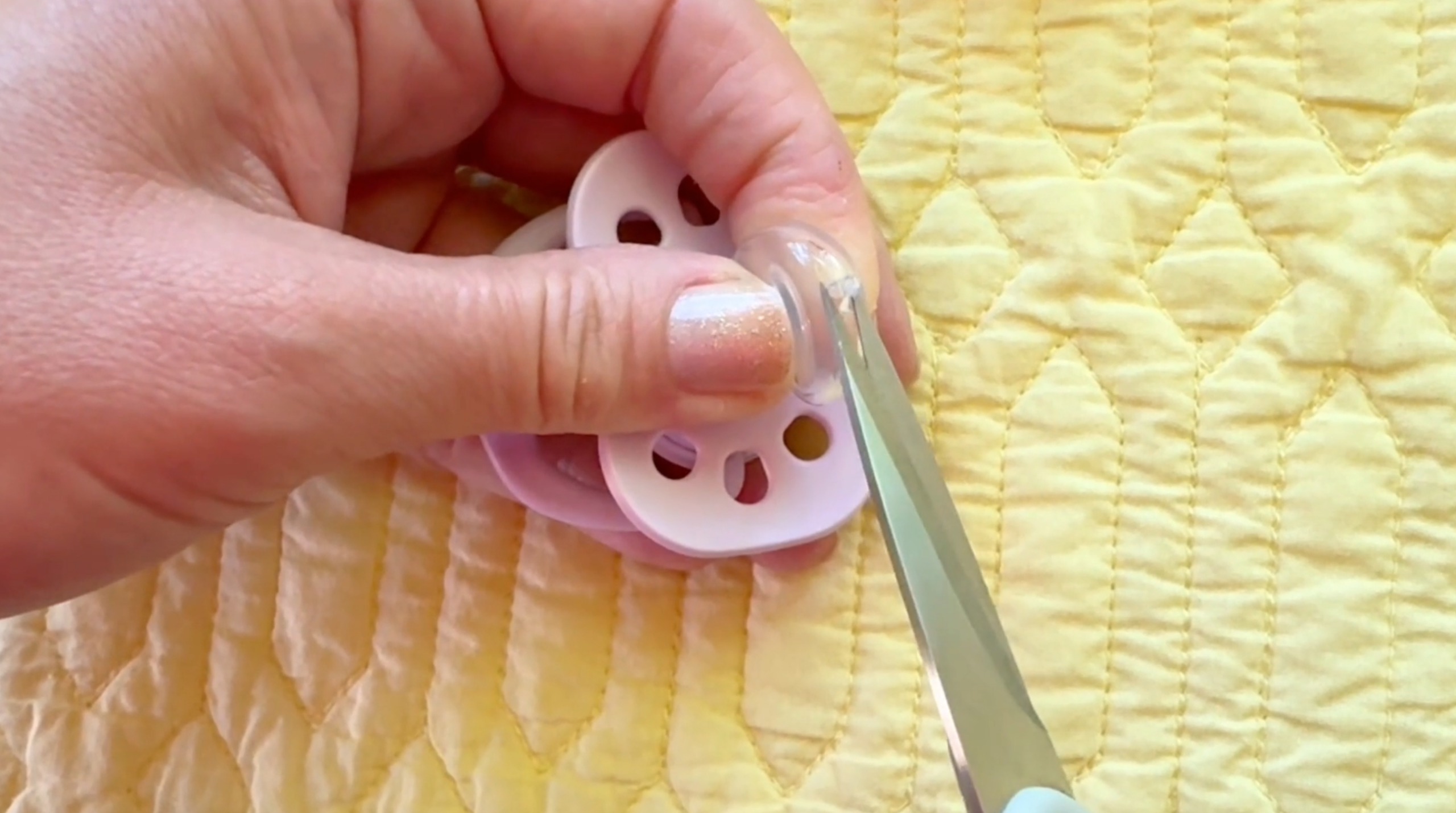
Step 2: Make One Tiny Opening
Using clean manicure or paper scissors, make a very small opening at the very tip of the pacifier nipple.
This releases the suction and allows the nipple to begin collapsing. The pacifier is still familiar, but it no longer feels quite the same.
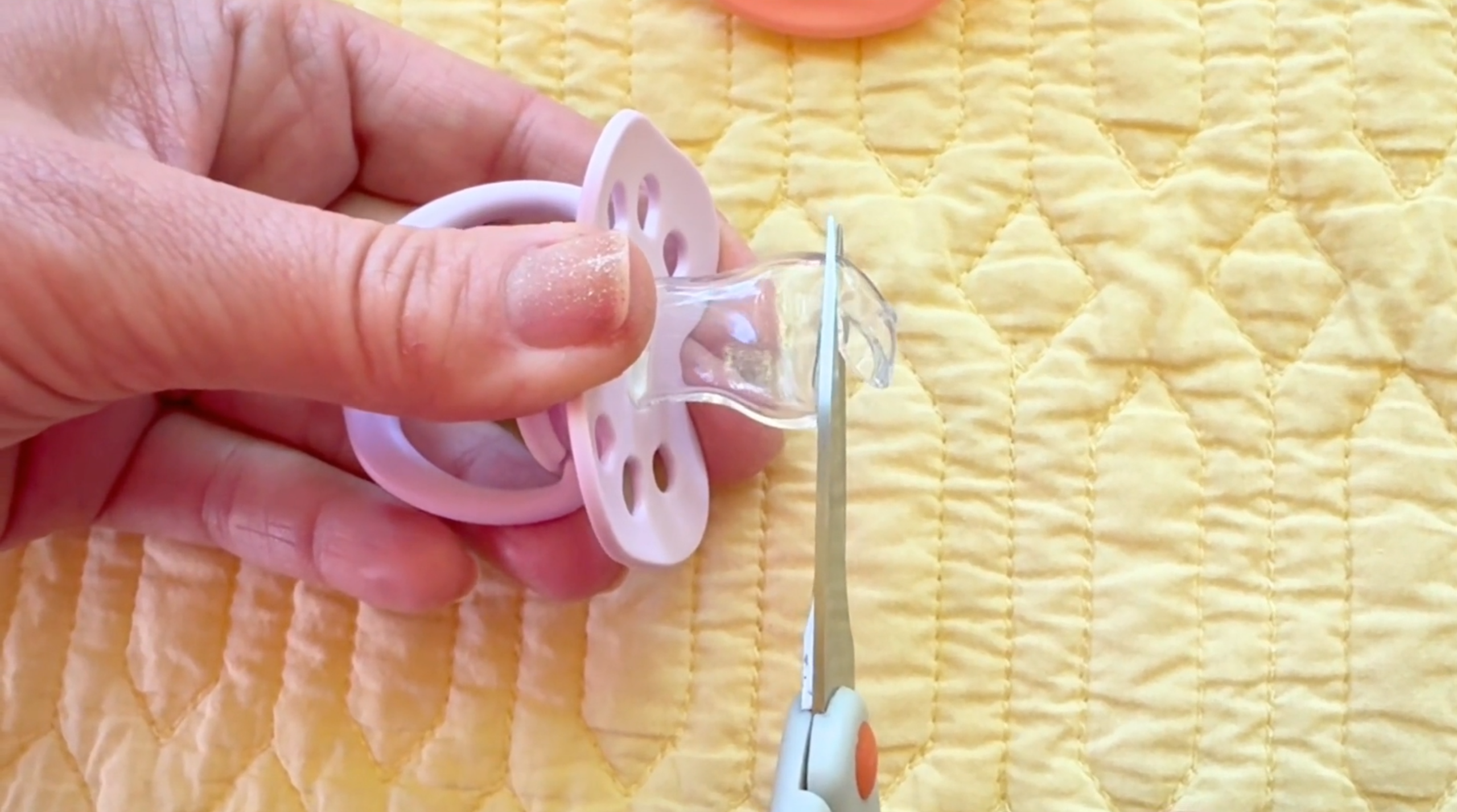
Step 3: Give Your Toddler Time
Allow your child a few nights to become accustomed to that first small change. There is no need to rush.
Some children lose interest surprisingly quickly. Others need a little more time, reassurance, and cuddling before they are ready for the next step.
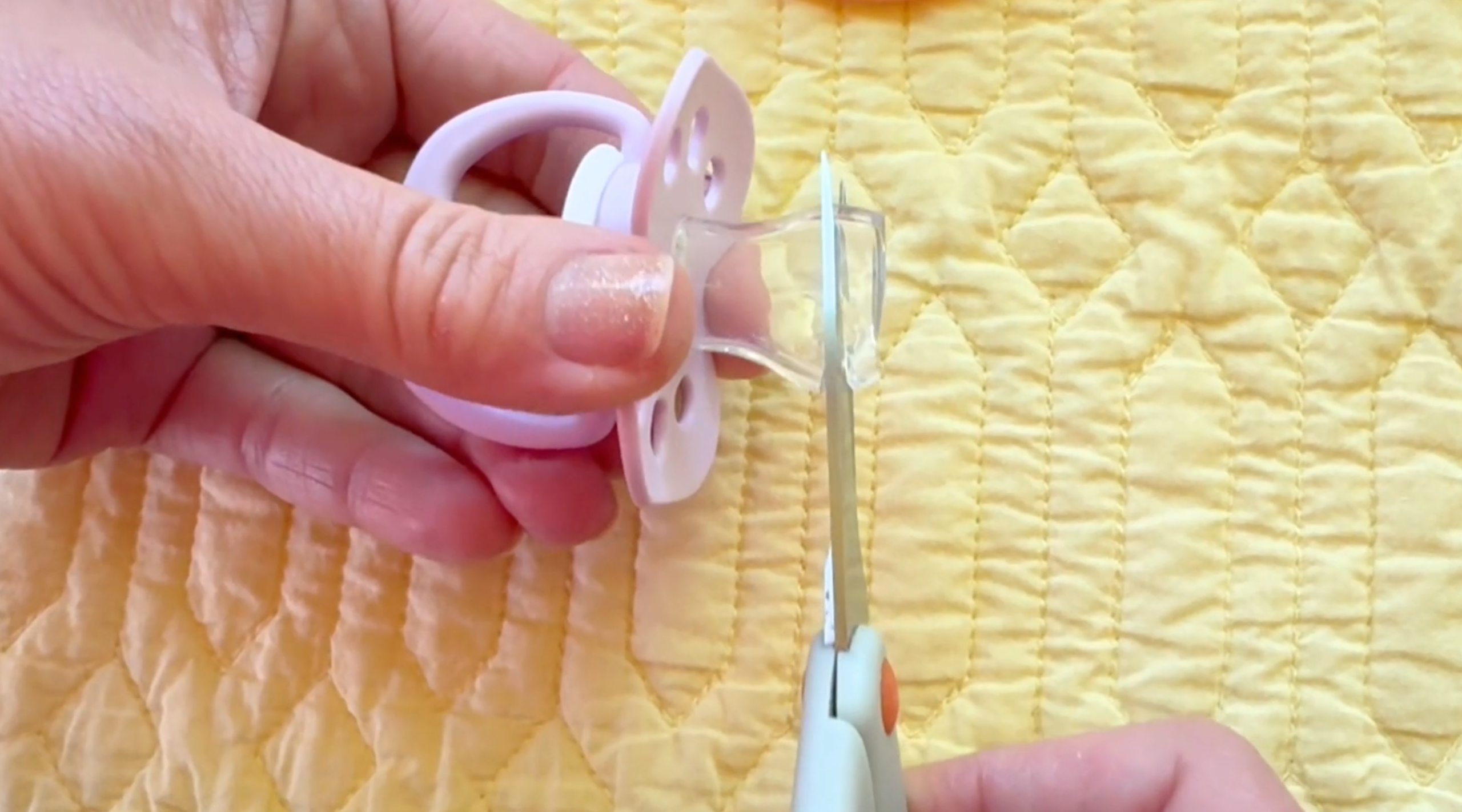
Step 4: Gradually Shorten the Tip
After a few nights, trim away another very small portion of the nipple. Continue gradually, allowing your toddler time to adjust between each change.
You might gently and playfully notice together that the binky is getting smaller and that perhaps those growing toddler teeth have been very busy!
The important thing is that this does not feel like something precious has been abruptly taken away. The pacifier simply becomes less and less satisfying to suck.
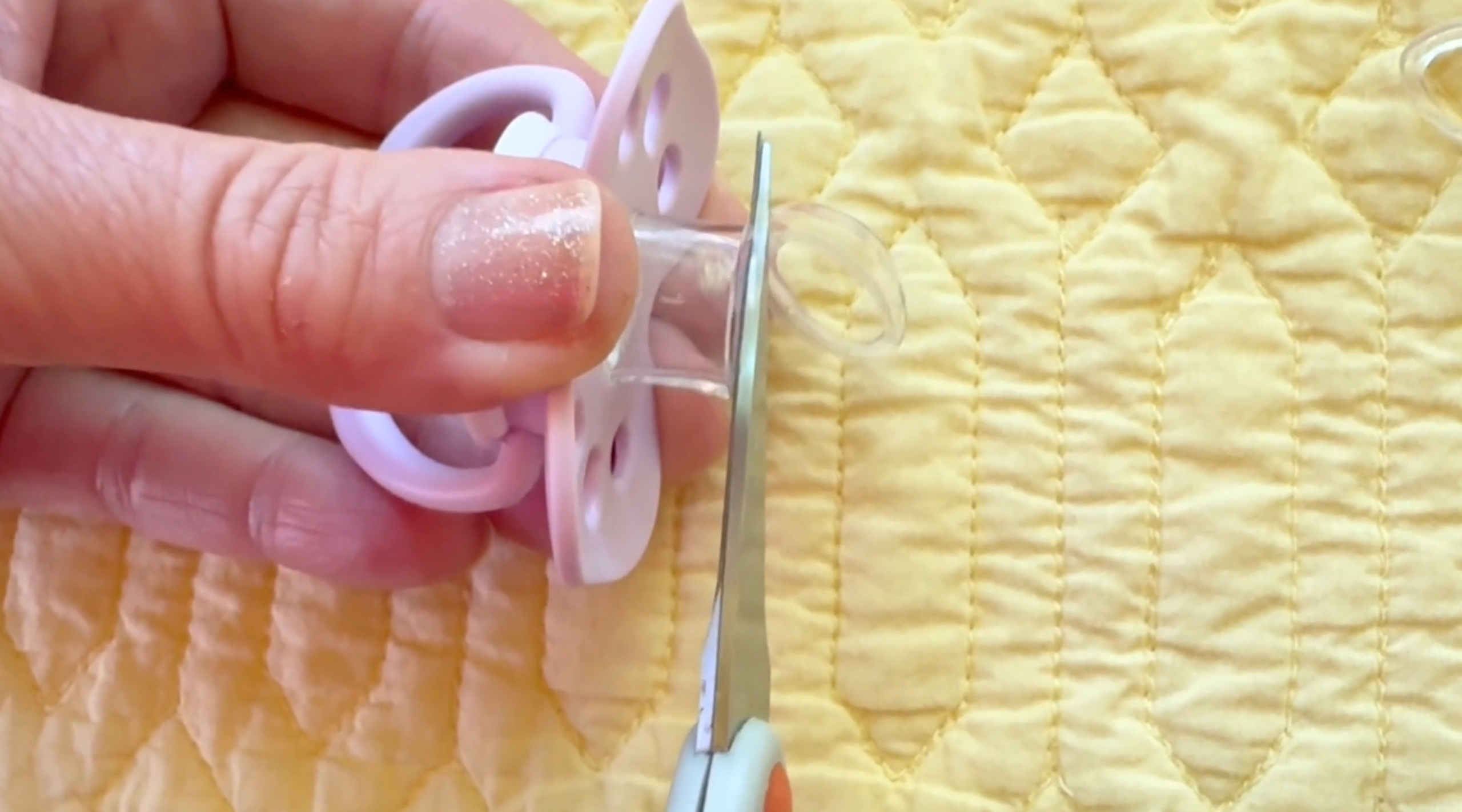
Step 5: Celebrate Binky Graduation
Continue the gradual process until very little of the nipple remains and your child is no longer interested in using it.
Then celebrate!
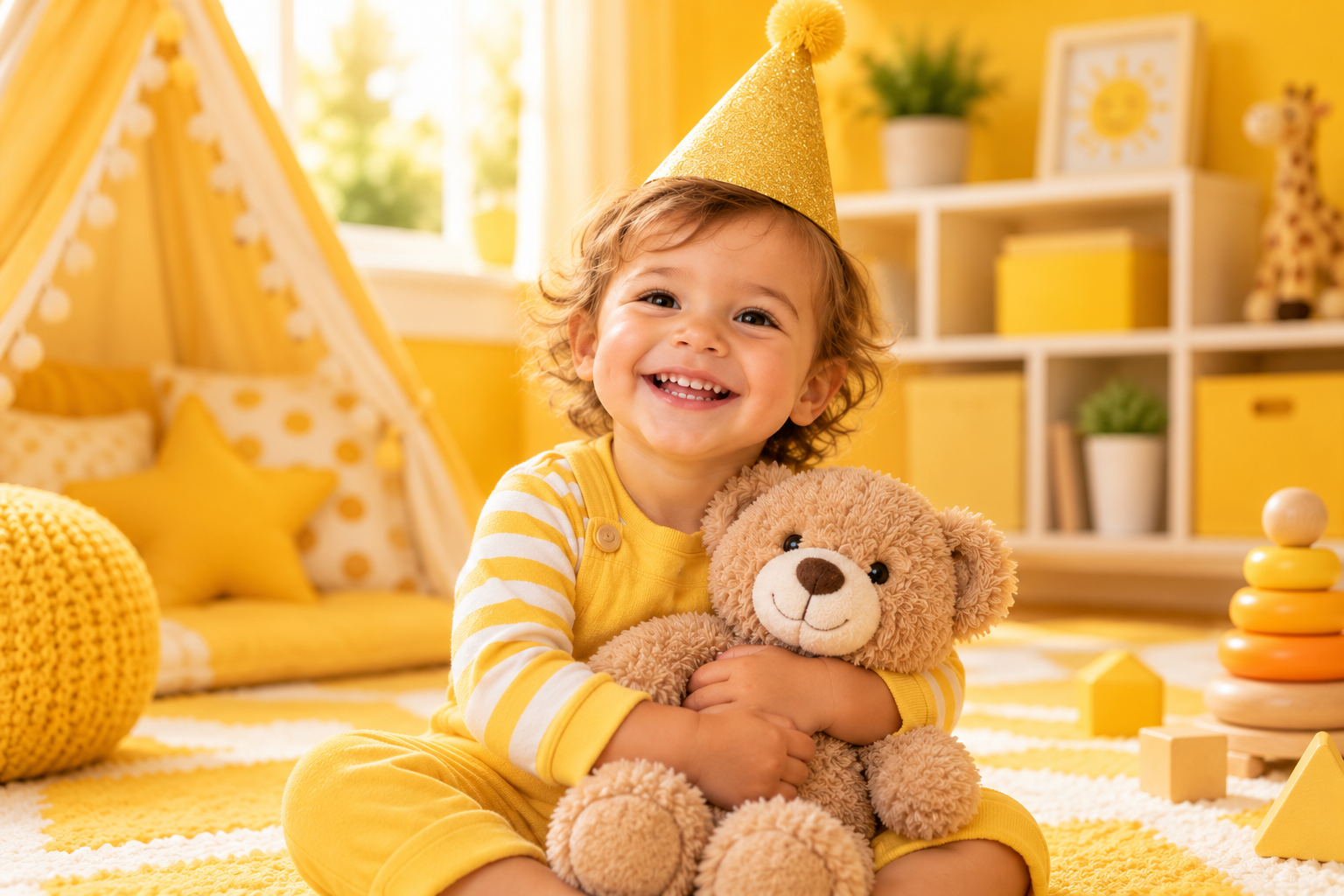
Your toddler has reached an important little milestone. A favorite stuffed animal, bedtime story, special cuddle, or small “binky graduation” ritual can help replace the comfort the pacifier once provided.
Happy pacifier graduation!
What age should I begin weaning my toddler off the pacifier?
According to the American Academy of Pediatric Dentistry, recommends that nonnutritive sucking habits be discontinued by age 3. Toddlers suckling a binky after 18 months may affect oral structures.
Is it okay to begin cutting the tip off of his pacifier?
Yes, as long as you are using clean scissors, making sure there are no rough edges and inspecting it routinely.
How long will this take?
Depending on your child, and how fast they adjust to the changes. There is no right or wrong time to wean your child off of a pacifier. Give your child time, patience, reassurance, and love.
What if my child gets upset or throws a tantrum?
Your child may become upset or have a tantrum. There is no need to rush the process, try spending extra time with them and giving extra love and support.
Does thumb-sucking have similar effects as a pacifier?
Yes, thumb-sucking can cause similar issues as a pacifier can, such as malocclusion and palate changes. However, it can be harder to stop a thumb-sucking habit, because the thumb or finger cannot be taken away as easily as a pacifier can. Similar methods of gentle support, reassurance and keeping the hands busy can help.
Can pacifier use affect my toddler’s speech?
Pacifier use may have an effect on the speech development of some children, especially if used frequently throughout the day. However, the evidence on this topic is limited so it is hard to say for sure. Some Studies have shown that frequent daytime pacifier can possibly affect speech problems in some children, but more research is needed.
What can you suggest as a comfort to my toddler who will no longer have his pacifier?
A stuffed animal, or a small blanket, or favorite toy can help comfort your toddler as they learn to give up their pacifier. Having something to cuddle and snuggle with during naps and bedtime can help ease the transition.
How can I help my child stop using a pacifier?
Nurture your child through every step of the way and give them lots of reassurance, patience, and love. Help them celebrate their achievements by giving lots of praise as they go through the pacifier weaning process. You can also reward their accomplishments by giving them an activity or something they enjoy. saying goodbye to pacifier can be a a challenging transition for any child, but the whole family will definitely be proud of the achievement.
Schedule your child’s first dental visit today! Contact us here.